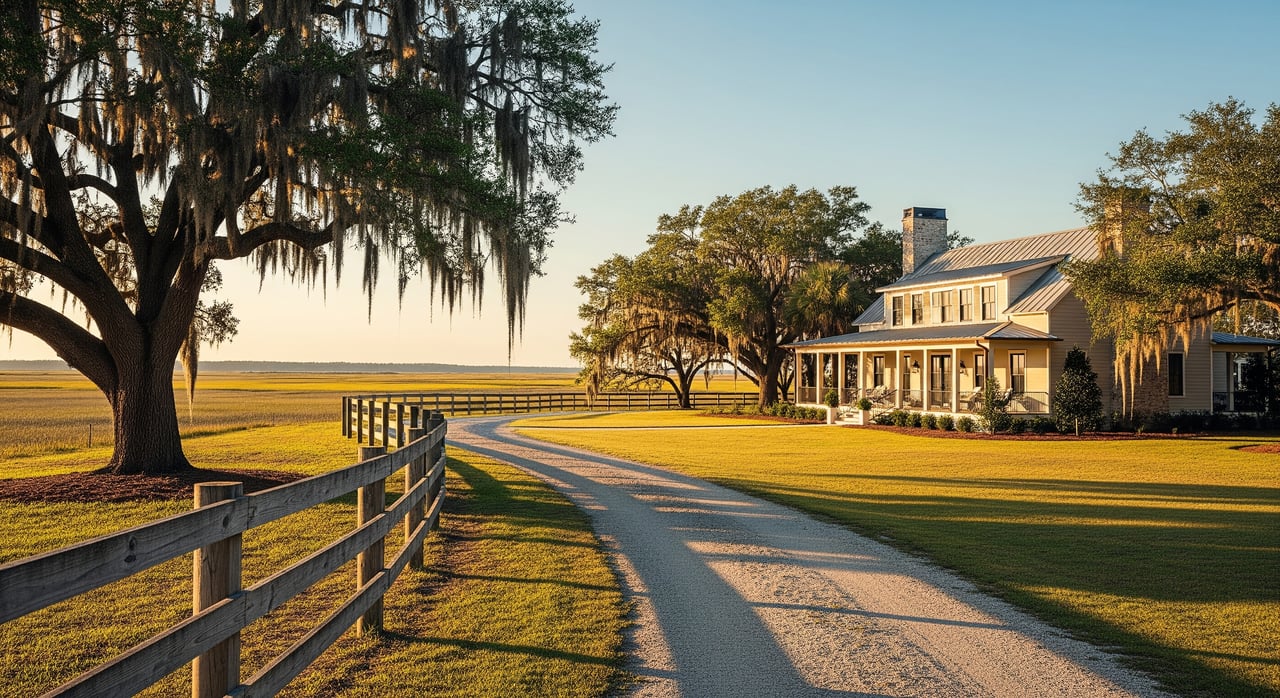
Dreaming of a private Lowcountry retreat where you can hear the wind in the pines and watch the tide roll through the marsh? If Awendaw is on your list, you’re on the right track. Buying acreage here can give you space, privacy, and access to coastal beauty. It also comes with specific steps that protect your investment.
In this guide, you’ll learn exactly how to evaluate Awendaw acreage so you can build or buy with confidence. You’ll see what to check with surveys and access, how to confirm septic and wells, what wetlands and flood zones mean for your plans, and how to structure smart contingencies. Let’s dive in.
Why Awendaw acreage stands out
Awendaw sits just north of Charleston along U.S. 17, where wooded uplands meet tidal creeks and marsh. The topography is mostly flat coastal plain with many low elevations. Parcels often blend pine and mixed hardwood forest with marsh fringe near creeks.
Lot sizes vary widely. You’ll find small rural homesites around 1 to 5 acres, larger tracts in the tens of acres, and even 100-plus acre timber holdings. Common uses include private estate homesites, small-scale agriculture, timber management, and low-density residential living with generous natural buffers.
Utilities are less dense than in suburban areas. Many properties rely on private wells and onsite septic systems. Electricity is commonly available, but natural gas lines are rare, so plan for propane or electric heat pumps. Broadband and cell coverage can be variable in more remote pockets, with satellite or fixed wireless often filling the gap.
Start with access, surveys, and title
Before you fall in love with a parcel, confirm that you can legally and practically reach it. This is essential for financing and long-term use.
Confirm legal access
Physical access is not enough. You need recorded legal access via public road frontage or a recorded easement. If access uses a private road or driveway, verify who maintains it, what surface exists, and whether it meets county or state standards for emergency vehicles.
Order a current boundary survey
Get a current, licensed boundary survey to confirm acreage, corners, encroachments, and access points. If you are financing, your lender may require an ALTA/NSPS level survey. Surveys can take 2 to 6 weeks depending on workload and complexity.
Review easements and title
Ask your attorney or title company to pull and review the title commitment. Look for utility easements, conservation easements, pipeline corridors, timber or hunting leases, and any restrictions that could affect building placement or use.
Test soils and plan for septic and wells
In much of Awendaw, you will rely on an onsite septic system and a private well. Early testing saves time and money later.
Verify septic feasibility
Soil type and water table depth drive septic design and cost. Request any existing perc tests, septic permits, or designs. If none exist, schedule a site evaluation and perc test in line with state rules. Some sites support conventional systems. Others with higher water tables or hydric soils may require engineered or mound systems.
Plan your well and water quality
If there is no public water, plan for a private well installed by a licensed driller. Ask for well logs, historic yields, and recent water tests for bacteria and common minerals. If no well exists, your driller can estimate depth and feasibility based on nearby results.
Understand wetlands, flood zones, and coastal rules
The coastal setting is part of Awendaw’s charm. It also means tidal marsh, floodplain considerations, and specific permitting steps in some locations.
Map wetlands and buildable uplands
If your parcel includes or borders marsh or low-lying areas, hire a qualified wetland scientist to delineate wetlands. This mapping shows what areas are regulated and what uplands are buildable. Any activities that impact wetlands may trigger federal and state review.
Check FEMA flood zones and elevation
Confirm your property’s flood zone on the current flood maps. If any portion lies in a Special Flood Hazard Area, new construction must elevate above the Base Flood Elevation. An elevation certificate and a topographic survey are smart to obtain early, especially if you plan to build. Flood insurance is typically required by lenders when you are in these zones.
Know coastal setbacks and permits
Properties with tidal frontage or marsh buffers can be subject to setback requirements and additional coastal review. Work with professionals early if you plan docks, shoreline stabilization, or any fill. These activities may require state coastal review and federal permits.
Plan for long-term coastal risk
Sea-level rise and storm surge can influence design and insurance costs over time. Elevated foundations and resilient construction are common in coastal Charleston and help manage these risks.
Check utilities, connectivity, and services
Utility and service availability can shape your budget and daily life on acreage.
- Electricity: Confirm the nearest service point and cost to extend lines if needed. Remote extensions can add cost.
- Fuel: Natural gas is limited. Plan for propane or electric heat pumps.
- Water and sewer: Verify if public lines are available or if you will use well and septic. Note required setbacks from wetlands and waterbodies.
- Internet and cell: Check availability for cable, fiber, fixed wireless, or satellite. If you work from home, make this a priority.
- Services: Confirm trash pickup, fire coverage, and response times. Verify school district boundaries if that matters to you.
Plan access, driveway, and drainage
Acreage often needs a new driveway or upgrades to an existing private road.
- Driveway permits: Tie-ins to U.S. 17 require state transportation permits. County roads require Charleston County approvals. Ask about culvert sizing and drainage.
- Construction staging: Clearing and grading can trigger stormwater and erosion control requirements if you disturb larger areas. Your builder should plan for compliance.
- Year-round access: Ask about road conditions after heavy rain and during storms. Confirm who maintains any private road sections.
Verify zoning and any restrictions
Before you commit, verify that your plans align with current rules.
- Zoning: Confirm zoning classification, setbacks, lot coverage limits, and any overlay districts. If the parcel lies within Town of Awendaw limits, check town rules too.
- Deed and conservation restrictions: Read recorded covenants, conservation easements, timber agreements, hunting leases, and mineral reservations. These can limit where and how you build.
- Agricultural context: Right-to-farm laws support agricultural activities. Be comfortable with nearby operations that may include noise or odors.
Financing, insurance, and taxes
Financing acreage differs from financing a typical suburban home. Plan for additional documentation and timelines.
- Loan types: Raw land loans usually have higher rates and shorter terms. Some lenders want proof of access and basic buildability like septic and well feasibility. Construction loans and select rural programs may be options, subject to eligibility.
- Insurance: Flood coverage through the national program is often required in Special Flood Hazard Areas. Wind and hurricane exposure can increase premiums near the coast. Elevation and construction type can help manage costs.
- Taxes: Review the current tax bill and any agricultural or timber valuations that may reduce taxes. Ask about rollback rules if the use changes.
Your Awendaw acreage due-diligence checklist
Use this checklist to structure your offer and contingency period.
Documents to request up front
- Current and prior surveys, recorded plats, and legal descriptions
- Current deed, preliminary title report, and list of recorded easements and covenants
- Tax map ID, current tax bill, and assessment details
- Any existing septic permits, perc tests, septic designs, or well logs
- HOA covenants or conservation easements, plus any timber or hunting leases
- Flood insurance claim history if available, plus any prior elevation certificates
Site investigations to complete during contingencies
- Updated boundary survey, ALTA level if your lender requires it
- Title commitment review by an attorney or title company
- Wetlands delineation if marsh or low areas are present or suspected
- Soil and perc testing, plus septic system evaluation aligned with state rules
- Well water testing or feasibility assessment if no well exists
- Topographic survey and elevation analysis relative to Base Flood Elevation
- Tree and timber assessment if the parcel includes managed stands
- Environmental site assessment if there is any concern about past contamination
- Driveway and access review, plus confirmation of maintenance and permits
- Utility availability checks and quotes for any necessary extensions
Permits and approvals to plan for
- Septic permit and installation approvals
- Building permit, stormwater, and erosion control permits if required
- Driveway and culvert permit from the appropriate agency
- Dock or shoreline permits for tidally influenced work when relevant
Typical timelines to expect
- Survey: 2 to 6 weeks depending on scope and demand
- Wetlands delineation and coordination: 4 to 12 or more weeks
- Septic testing and permit: several weeks to a few months
- Lender approval for acreage or raw land: variable, allow extra time
- Major coastal or wetlands permits: can extend many months if needed
Real-world parcel scenarios
Use these examples to set expectations and budget.
Example A: Small wooded upland parcel, 3 to 6 acres
- What you might see: Pine and hardwood forest set back from tidal creeks, modest slope, and an old logging path that could serve as a rough drive.
- What it means: Often suitable for conventional septic and a standard well. Development costs are moderate. Confirm legal access and driveway maintenance.
Example B: Mixed upland with tidal marsh, 10 to 30 acres
- What you might see: A higher, buildable ridge with expansive marsh and creek frontage.
- What it means: Your buildable footprint is likely limited to the upland ridge. Plan for wetlands delineation, coastal setbacks, flood considerations, and permits for any dock plans.
Example C: Large timber tract, 50 or more acres
- What you might see: Managed pine stands with internal logging roads and few cleared homesites.
- What it means: Privacy and potential timber income. Review timber deeds, harvest history, and road upkeep. Active logging can affect access and aesthetics during operations.
Example D: Cleared lot near U.S. 17, 1 to 2 acres
- What you might see: Easier access with nearby utilities and a shorter driveway.
- What it means: Lower site development cost and better internet and electric availability, with less seclusion. Corridor zoning can shape long-term neighborhood change.
How to structure a winning offer
Strong offers on Awendaw acreage balance price with smart protections. Your goal is to prove access, buildability, and realistic timelines before you close.
- Include contingencies for survey, title, wetlands delineation, soil and perc testing, well feasibility, flood and elevation review, and utility quotes.
- Ask for all existing permits and tests early. If a seller has older reports, verify they still meet current standards.
- Sequence your inspections to catch fatal flaws first. Start with access and survey, then wetlands, then soils and septic.
- Allow enough time for wetlands and septic findings. Build in extensions if agency coordination becomes necessary.
Who to call as you evaluate Awendaw acreage
As you move forward, plan to speak with county and state offices along with licensed local professionals.
- Charleston County Planning and Zoning and Land Development Services for zoning, driveway and stormwater guidance
- Town of Awendaw if the parcel sits within town limits
- State health and environmental authorities for septic permitting and coastal guidance
- U.S. Army Corps of Engineers for wetlands jurisdiction questions
- Floodplain administrators for flood zone mapping and elevation certificate requirements
- USDA soil resources for soil data that informs septic and foundation design
- A licensed land surveyor, wetland scientist, septic designer or installer, and well driller for site-specific assessments
- A title company and real estate attorney for title review and easement interpretation
- Local lenders and insurance agents familiar with rural and coastal policies
Make your Awendaw move with confidence
Acreage in Awendaw offers privacy, nature, and a Lowcountry lifestyle that is hard to beat. The key is disciplined due diligence. Confirm legal access, map wetlands, test soils for septic, plan utilities, and set realistic timelines. With the right plan and a trusted local advocate, you can secure the space you want and avoid costly surprises.
If you are ready to explore Awendaw acreage, let an award-winning local expert guide you from tour to closing. Reach out to Kimberly Lease for concierge buyer representation, vetted vendor referrals, and a smooth, data-informed path to your perfect property.
FAQs
What sizes of acreage are common in Awendaw?
- Parcels range from 1 to 5 acre homesites to larger tracts in the tens to hundreds of acres, often mixing wooded uplands with marsh buffers.
How do wetlands affect building on Awendaw land?
- Wetlands reduce buildable area and may require permits for impacts; a professional delineation identifies regulated areas and confirms your upland building envelope.
What should I know about septic and wells in Awendaw?
- Many parcels use onsite septic and private wells, so early perc testing, septic design review, and water testing are critical to confirm feasibility and cost.
Do I need flood insurance for an Awendaw acreage home?
- If your home site lies in a Special Flood Hazard Area, lenders typically require flood insurance, and you will likely need to elevate construction above the mapped base flood level.
How can I confirm legal access to a rural parcel?
- Verify recorded road frontage or a recorded easement, plus maintenance responsibilities and standards for emergency access, before you rely on any physical driveway.
What financing options exist for acreage in Awendaw?
- Raw land loans and construction loans are common, often with higher rates and more documentation; lenders may require proof of access and septic or well feasibility.