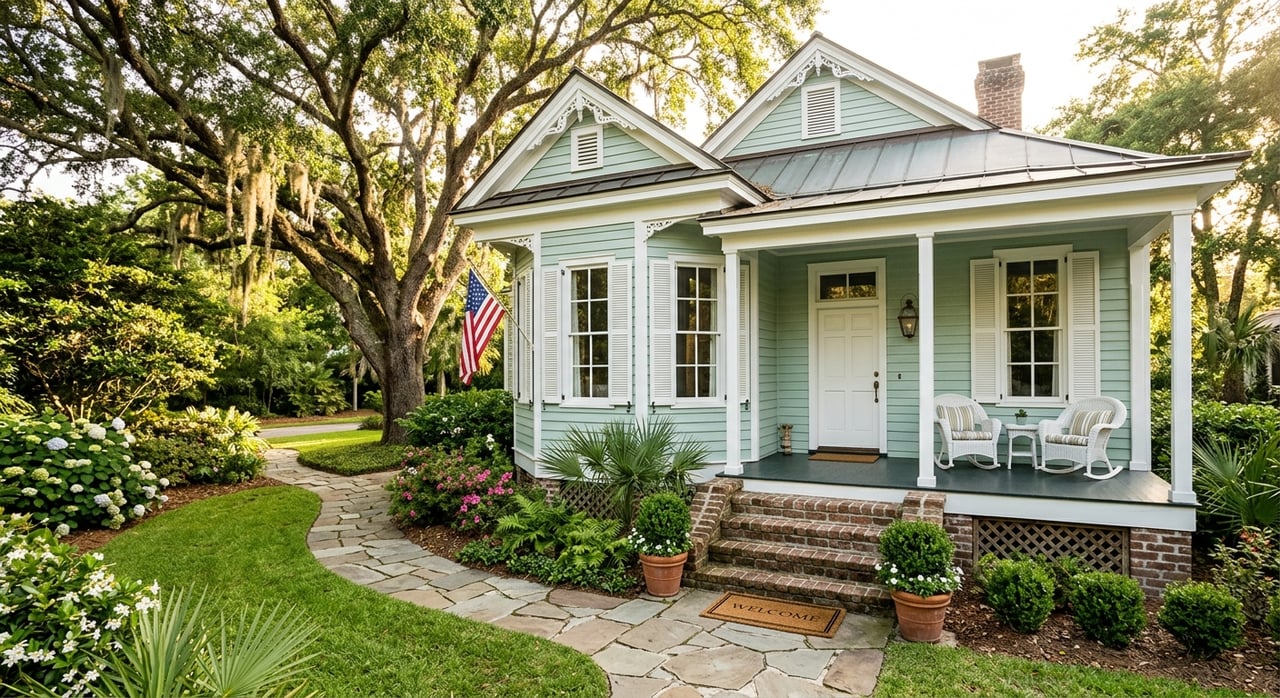
Are you torn between the character of an older Summerville home and the ease of a newer build? You are not alone. In Summerville, you can find everything from homes dating back to the 1800s to newer properties in large planned communities, so the right choice often comes down to how you want to live day to day. This guide will help you compare historic charm versus newer homes in Summerville, so you can move forward with more clarity and confidence. Let’s dive in.
Summerville offers both styles
Summerville has a housing mix that gives buyers real options. The Town’s 2025-2029 Consolidated Plan draft reports that 57.3% of owner-occupied homes were built in 2000 or later, while 13.8% were built from 1950 to 1979 and 3.3% were built before 1950.
That blend helps explain why this decision feels so important. You are not choosing between a rare old house and a rare new one. In Summerville, both are part of the local market, and both can be a smart fit depending on your budget, lifestyle, and comfort with maintenance.
The same local data also shows a 69.1% owner-occupied housing rate and a median owner-occupied home value of $328,100. For buyers comparing options, that means it helps to think beyond price alone and focus on the total cost and experience of ownership.
Why older homes appeal
Older homes in Summerville often stand out for their individuality. The town’s historic walking-tour materials describe homes dating to the 1800s and a streetscape where no two houses are alike.
If you love architecture, mature surroundings, and a stronger sense of history, an older home may feel more special from the start. These homes often attract buyers who value details that are hard to duplicate in standard floor plans.
In and around downtown, that sense of place can be a major draw. You may find that an older home gives you a more distinct look and feel than many newer properties built around similar layouts.
Historic district rules matter
If you are looking in the Downtown Historic District, there is an extra layer to understand. The Town of Summerville says the Board of Architectural Review reviews new construction, exterior modifications, and demolition within the district.
That does not mean buying there is a bad idea. It simply means changes to the exterior may involve more review, which is important to factor into your timeline, plans, and budget.
For the right buyer, those guidelines help protect the area’s visual character. Still, if you want to make quick exterior changes without review, a historic property may feel less flexible.
Older homes may need more work
Charm often comes with tradeoffs. Summerville’s housing-condition framework lists inoperable plumbing, faulty electrical systems, leaking roofs, and compromised structural components as examples of substandard housing.
That does not mean every older home has these issues. It does mean you should expect a more careful inspection process and plan for possible updates, especially if the home has not been recently renovated.
The town’s Building Department requires permits and inspections for new buildings, renovations, and repairs to electrical, gas, mechanical, and plumbing systems. If you buy an older home and plan improvements, that local process will likely be part of your path.
Lead paint is part of due diligence
For older properties, one more issue deserves attention. The town notes that housing built before 1980 may contain lead-based paint, and its 2025 Consolidated Plan draft estimates 3,838 units fall into that category.
For buyers, the takeaway is simple. If you are considering an older home in Summerville, testing, inspections, and repair planning matter even more.
Why newer homes appeal
Newer homes in Summerville often attract buyers who want a simpler move and fewer near-term repair concerns. In communities like Nexton, builders market features such as open layouts, flex spaces, smart-home technology, energy-efficient systems, single-level homes, main-floor primary bedrooms, semi-custom options, and quick move-in homes.
That combination can be especially helpful if you are relocating, balancing a busy schedule, or simply want your home to feel move-in ready. You may be able to spend less time on repairs and more time settling into your routine.
For many buyers, the biggest benefit is predictability. New systems, newer materials, and builder-backed peace of mind can reduce the chance of major early surprises.
Planned communities add convenience
Some of Summerville’s newer housing is centered around master-planned communities. Nexton says nearly a third of the community is devoted to parks and nature, the trail network spans more than 10 miles, and residents have access to event lawns, dog parks, pools, pickleball courts, and more than 120 shops, eateries, grocery stores, and offices inside the community.
Summers Corner also emphasizes shared amenities. Its trail materials highlight miles of trails, and The Club at Summers Corner says it will include a lagoon-style pool, restaurant, adults-only pool, splash park, and waterslides.
If daily convenience matters to you, these communities may check a lot of boxes. You may find that newer neighborhoods bundle home design, recreation, and routine errands into one place.
Low maintenance can come with fees
Newer homes are often marketed as low maintenance, but that does not mean cost-free. Amenity-rich communities can introduce monthly dues or club-style fees that become part of your ongoing housing budget.
For example, Summers Corner says club dues start at $50 per month per home when the club opens. That may be well worth it for some buyers, but it should be weighed alongside mortgage payment, taxes, insurance, and utilities.
Comparing daily lifestyle
When buyers compare older and newer homes in Summerville, the best choice usually comes down to daily life. The question is not which category is better overall. The question is which one fits how you want to live.
Here are a few of the biggest differences to consider.
Maintenance and repairs
Older homes are more likely to need updates to plumbing, electrical systems, roofing, or structural components. Newer homes generally come with new systems and may include builder warranties.
If you do not want to take on repairs soon after closing, newer construction may feel more comfortable. If you are willing to trade convenience for character, an older home may still be worth it.
Floor plan and layout
Historic homes tend to be more unique, while newer homes often offer layouts designed for current preferences. In newer communities, builders actively market open-concept living, flex spaces, and single-level options.
That can matter if you work from home, want a main-floor bedroom, or need a layout that supports changing household needs. On the other hand, if you value originality over standardization, older homes may have more personality.
Outdoor setting and amenities
Older neighborhoods may feel more individualized and tree-shaded, while planned communities often dedicate substantial land to shared parks, trails, and recreation spaces. That is not a rule for every property, but it is a useful pattern in Summerville.
It is also worth remembering that public amenities are available across town. Summerville offers places like the nearly seven-mile Sawmill Branch Trail and Doty Park, which includes a splash pad, pickleball courts, a walking trail, and free public Wi-Fi.
Budget and ongoing costs
Budget is about more than the list price. Summerville’s median owner-occupied home value is $328,100, while Nexton homes are advertised from the $300s to over $1 million.
With older homes, you may need a reserve for repairs or modernization. With newer homes, you may face higher purchase prices in some communities or recurring dues tied to amenities.
Which home type fits you best?
If you are still deciding, it helps to think in terms of tradeoffs instead of labels. Both older and newer homes can work well in Summerville, but they serve different priorities.
An older home may fit you best if you:
- Value character and architectural variety
- Want a home with a strong sense of history
- Are comfortable budgeting for updates or repairs
- Do not mind a more detailed inspection process
- Appreciate established streetscapes and individuality
A newer home may fit you best if you:
- Want a more turnkey move
- Prefer open layouts and modern systems
- Like the idea of shared trails, pools, or neighborhood amenities
- Want lower near-term repair risk
- Are comfortable with possible HOA or club-style costs
How to make a smart decision in Summerville
The most practical way to compare homes is to look at the full ownership picture. Think about the purchase price, likely repairs, monthly fees, your renovation appetite, and how much convenience matters to you.
You should also pay attention to local rules and property condition. In Summerville, that can include historic district review, permits for certain repairs and renovations, and added due diligence for homes built before 1980.
When you approach the decision this way, the answer usually becomes clearer. The best home is the one that supports your lifestyle, your budget, and your comfort level after the excitement of closing day wears off.
Whether you are drawn to a historic property near downtown or a newer home in a planned community, having a local guide can make the comparison much easier. If you want help weighing your options in Summerville, connect with Kimberly Lease for expert, personalized guidance.
FAQs
Do older homes in Summerville require approval for exterior changes?
- If the home is within the Downtown Historic District, the Board of Architectural Review reviews new construction, exterior modifications, and demolition.
Are older homes in Summerville more likely to need repairs?
- They can be, especially when it comes to plumbing, electrical systems, roofing, or structural components, so detailed inspections are important.
Do homes built before 1980 in Summerville need extra caution?
- Yes. The town notes that homes built before 1980 may contain lead-based paint, so testing and due diligence are especially important.
Do newer homes in Summerville usually have lower maintenance?
- Often yes, because systems, materials, and appliances are newer, and some homes may include builder-backed peace of mind.
Do newer planned communities in Summerville have monthly fees?
- They can. For example, Summers Corner says club dues start at $50 per month per home when the club opens.
Is one home type better for buyers in Summerville?
- Not always. The better fit usually depends on whether you prioritize character and historic context or turnkey convenience and amenity-rich living.