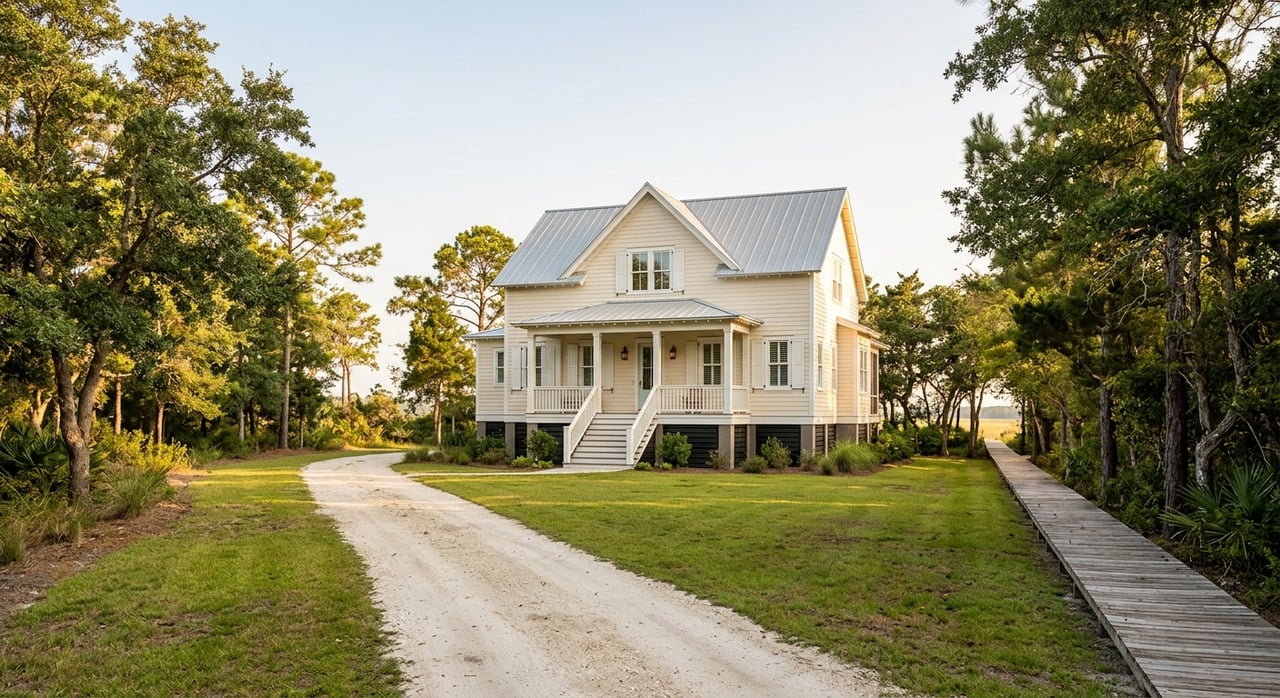
Wondering whether Awendaw’s best lifestyle comes with a dock view or a stretch of open land? You are not alone. Many buyers looking in this part of Charleston County are drawn to the same thing: a rural-coastal setting that feels peaceful, private, and connected to the outdoors. The challenge is deciding whether your version of that lifestyle looks more like marsh and tidal creek access or room to spread out on inland acreage. This guide will help you compare both paths so you can choose with more clarity and confidence. Let’s dive in.
Why Awendaw Offers Both
Awendaw is a small town in Charleston County with about 1,200 residents, and its appeal is closely tied to its rural setting. The town has stated that it wants to preserve its rural character, open space, waterways, and forests. Set between Francis Marion National Forest and Cape Romain National Wildlife Refuge, Awendaw gives you a rare mix of privacy and coastal access.
That setting shapes the housing market in a meaningful way. Recent market snapshots show a premium price point with mixed inventory. Redfin reports a median sale price of $869,551 over the last three months, while Realtor.com shows 75 active homes and a median list price of $1,276,495, reflecting the difference between sold data and active listings across both waterfront and acreage-style properties.
If you browse the kinds of homes that appear in Awendaw, you will notice the split right away. Waterfront homes, homes with docks, large lots, no HOA options, RV or boat parking, and horse stables all show up as common search categories. In other words, Awendaw attracts buyers who want to live on the water and buyers who want more land.
Waterfront Living in Awendaw
In Awendaw, waterfront living often means tidal creek, marshfront, or Intracoastal Waterway access rather than direct oceanfront property. That distinction matters because it shapes both the lifestyle and the practical side of ownership. For many buyers, this part of the market is about being close to boating, kayaking, fishing, and wildlife-rich surroundings.
The U.S. Forest Service describes Awendaw Creek as a brackish creek running through salt marsh and oysterbanks, with access to Cape Romain National Wildlife Refuge and an endpoint at Buck Hall Recreation Area. Buck Hall sits on the Intracoastal Waterway and offers access toward Cape Romain and Bulls Bay. That helps explain why water-oriented buyers often see Awendaw as a place to enjoy everyday access to Lowcountry waterways.
Why buyers choose waterfront
If your ideal day starts with marsh views or ends with a boat ride, waterfront may be the better fit. This type of property tends to appeal most to buyers who want direct coastal ambiance and easy access to the water. It can also be a strong match for second-home buyers or lifestyle-driven buyers who see the water connection as the main value.
Common reasons buyers lean waterfront include:
- You want boating, kayaking, fishing, or paddling close to home.
- You value marsh, creek, or Intracoastal views as part of daily life.
- You are focused more on access and scenery than on extra land.
- You see the property as a lifestyle purchase first.
What to check before you buy waterfront
The biggest mistake buyers make is assuming that waterfront automatically means dock-ready. In South Carolina, alterations in coastal waters and tidelands require authorization through the state’s coastal management process. Common permit-related activities include docks, bulkheads, boat ramps, floating docks, living shorelines, and boat-storage structures.
Even if a neighborhood has a dock master plan, that does not guarantee a dock permit will be issued for a specific lot. That means one of your first questions should be whether the property has an existing permitted structure or whether a future dock or shoreline improvement is actually feasible. This is a critical part of due diligence in Awendaw.
Flood and insurance matter more on the water
For waterfront and marshfront properties, flood review should happen early in your search. FEMA’s Flood Map Service Center is the official source for flood hazard maps, and federally regulated lenders require flood insurance for buildings in Special Flood Hazard Areas within participating communities. That can directly affect your monthly housing cost.
Sea level trends are also part of the bigger picture in coastal ownership. NOAA’s Charleston tide gauge shows a mean sea level trend of 3.48 mm per year, or about 1.14 feet per 100 years. NOAA also notes that high-tide flooding becomes more frequent in lower-lying areas where relative sea level rise is higher.
That does not mean waterfront is the wrong choice. It simply means you should treat flood zone review, insurance cost, and elevation-related questions as part of your first-pass budget. If the water is the reason you are buying, you want the full financial picture upfront.
Acreage Living in Awendaw
If waterfront is about access and views, acreage is about space and flexibility. Larger inland properties align closely with Awendaw’s rural identity, especially given the town’s focus on open space, waterways, and forests. For many buyers, this is the version of Awendaw that feels most peaceful and self-directed.
Acreage homes often appeal to buyers who want more separation from neighbors and more freedom in how they use their property. Search categories in Awendaw regularly include large lots, no HOA homes, guest houses, RV or boat parking, and horse stables. That tells you there is real demand for homes where the land itself is a major part of the value.
Why buyers choose acreage
Acreage may be the better fit if you want the Awendaw lifestyle without needing daily water access. You may care more about privacy, room for equipment or recreational storage, or simply the feeling of having more breathing room. For some buyers, that tradeoff is easy.
Common reasons buyers lean acreage include:
- You want more land and more separation from nearby homes.
- You do not need a dock or direct marsh access.
- You prefer a quieter, land-focused ownership experience.
- You are comfortable managing more of the property yourself.
What to check before you buy acreage
With acreage, your due diligence often shifts away from shoreline permitting and toward land systems. One of the biggest questions is whether the property is on public water and sewer or relies on a private well and septic system. That difference affects inspections, maintenance, and long-term ownership costs.
EPA guidance notes that septic systems are common in rural areas not served by public sewer. The right system depends on lot size, slope, soil conditions, home size or occupancy, local and state rules, and budget. The owner is also responsible for maintenance, with septic tanks generally needing inspection every 1 to 3 years and pumping every 3 to 5 years.
EPA also recommends protecting the system from flooding and ponding, not driving or parking on the drainfield, not building on top of it, and keeping trees and shrubs away to prevent root damage. These may seem like small details at first, but they become important on larger parcels where the home’s systems are more independent. Clemson Extension also provides resources for households that rely on private wells, which is another practical ownership factor for some acreage properties.
Waterfront versus acreage: the real tradeoff
The easiest way to compare these two property types is to focus on what you will use most often. If your top priorities are boating, paddling, fishing, and water views, waterfront or marshfront usually makes more sense. If your top priorities are privacy, land use, and flexibility, acreage is often the better fit.
In Awendaw, both choices can exist in the same small market, which is part of what makes the town so appealing. You are not just choosing a house style. You are choosing how you want to spend your time and what kind of ownership experience feels right to you.
Here is a simple side-by-side comparison:
| Priority | Waterfront or Marshfront | Acreage |
|---|---|---|
| Daily lifestyle | Water access, views, boating, fishing | Privacy, space, land use |
| Main due diligence | Flood maps, insurance, dock and shoreline permissions | Septic, well, drainage, land systems |
| Best for | Lifestyle and second-home buyers focused on water | Buyers who want room to spread out |
| Common tradeoff | More coastal review and insurance planning | More system maintenance and land care |
Questions to ask before making your choice
Before you decide, it helps to separate your must-haves from your nice-to-haves. A pretty view is important, but daily function matters more over time. The same is true for a large parcel that looks appealing until you realize how much maintenance it may require.
As you compare homes in Awendaw, ask these questions:
- Is the property truly waterfront or marshfront, and what kind of access does it actually offer?
- If a dock or shoreline work matters to you, is that activity permitted on this specific site?
- What does the FEMA flood map show for the address?
- Will your lender require flood insurance?
- Is the home on public water and sewer, or does it rely on a well and septic system?
- Are there HOA, architectural review, or other local approval requirements that could affect your plans?
Those answers can quickly make one option stand out over the other. They also help you move beyond the emotional pull of a listing and into a smarter, more complete decision.
How to choose with confidence
If you picture yourself launching a kayak before dinner or watching the tide shift from your porch, the waterfront side of Awendaw may be worth the added diligence. If you picture space for hobbies, storage, privacy, and a more land-centered pace, acreage may deliver the better long-term fit. Neither choice is universally better. The right answer depends on how you want to live.
That is especially true in a place like Awendaw, where the rural-coastal balance is the whole draw. The strongest buying decisions usually happen when you line up the property type with your real lifestyle, not just the photos that first caught your eye.
If you are weighing waterfront against acreage in Awendaw, working with a local guide can make the process much easier. Kimberly Lease can help you compare properties, understand the local market, and focus on the details that matter most for your goals.
FAQs
What does waterfront usually mean in Awendaw real estate?
- In Awendaw, waterfront often means tidal creek, marshfront, or Intracoastal Waterway access rather than direct oceanfront property.
What should buyers check before purchasing an Awendaw waterfront home?
- You should review flood maps, likely insurance needs, and whether docks or shoreline changes are actually permitted for that specific property.
What should buyers check before purchasing an Awendaw acreage home?
- You should confirm whether the home uses public utilities or relies on a private well and septic system, and evaluate drainage, lot conditions, and ongoing land maintenance needs.
Is waterfront property always better than acreage in Awendaw?
- No. Waterfront is usually better for buyers focused on water access and views, while acreage is usually better for buyers who want privacy, flexibility, and more land.
How expensive is the Awendaw housing market?
- Recent market snapshots show a median sale price of $869,551 over the last three months and a median list price of $1,276,495 for active homes, reflecting a mix of property types and pricing tiers.